

Anxiety & OCD Therapy
Trauma-Informed & Neurodiversity Affirming
Hi, I’m Sam
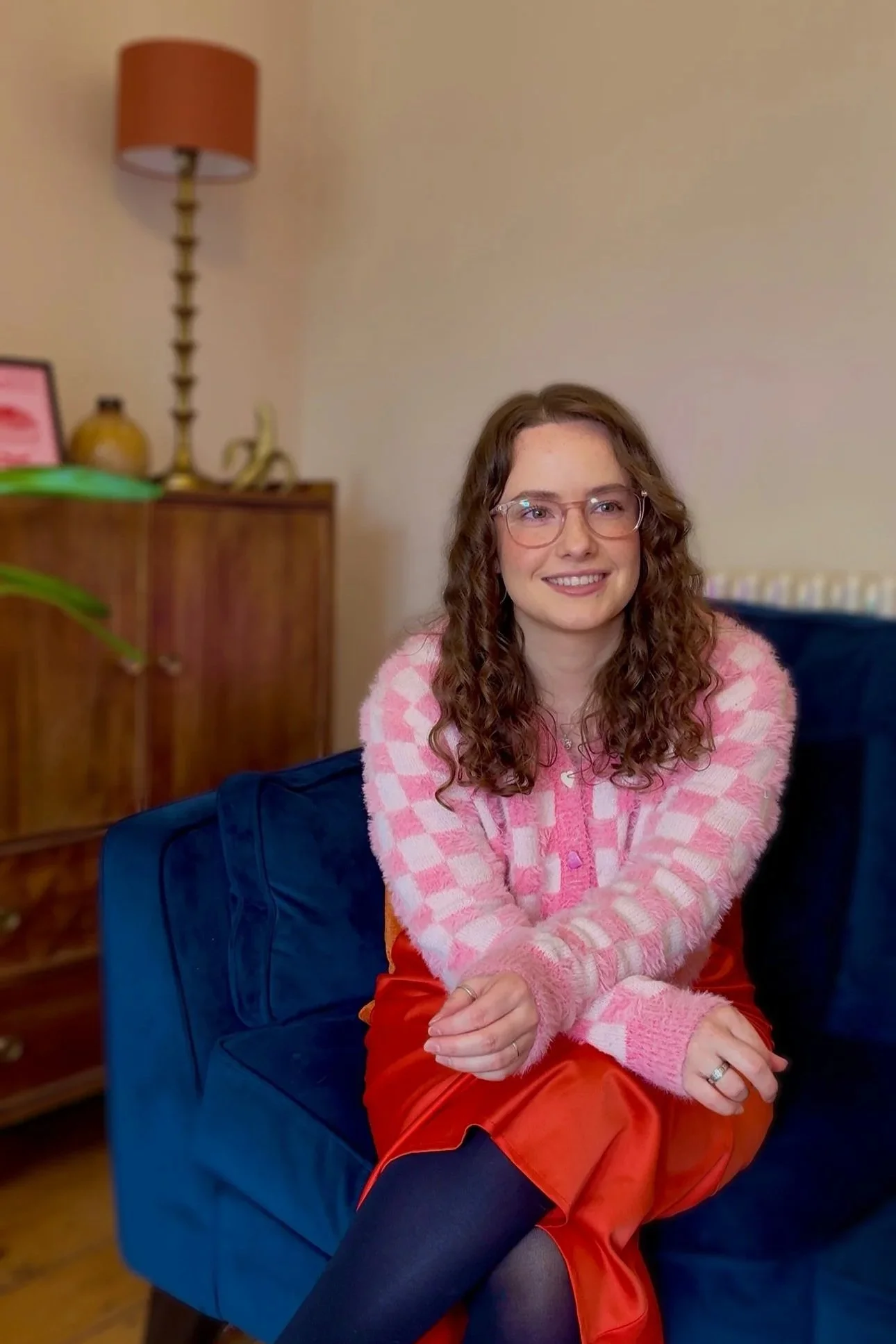
I’m so glad that you’re here!
I am a UK based therapist specialising in Anxiety and OCD.
Often people reach out for help when they feel they no longer have control over their anxiety. This may look like constant worrying, intense sensations in the body, or difficulty making decisions through fear of things going wrong. Many people feel shame about their experiences and are held back from living a full life.
Some people report experiencing trauma and others can’t pinpoint the cause of their anxiety. Whatever your story, we can work together to help you get to a place where you feel unburdened by anxiety and able to live the life you truly want.
I use a combination of Cognitive Behavioural Therapy (CBT) and Eye Movement Desensitisation Reprogramming (EMDR). All sessions are tailored and bespoke to you, to help you work towards long-lasting relief from distress and empowerment to make any changes you wish to make.
Neurodiversity-Affirming Therapy
As a late-diagnosed neurodivergent therapist, I specialise in adapting CBT and EMDR for neurodivergent people. Click here to read more about my story and discover what steps are taken to ensure my service is supportive, inclusive and neurodiversity-affirming.
“Sam was exceptionally helpful for me as I went through some difficult times. I always looked forward to our sessions and she really helped me be much more happy, confident and secure in myself. I can safely say I would not be where I am without her help, and am leaps and bounds ahead of where I was starting therapy.” - Anonymous Client
FAQs
-
The short answer is: no!
Whether you are coming for support for anxiety, navigating your neurodivergence or both, you don’t need to have been officially diagnosed with anything to start therapy. It is not always possible to access an official diagnosis due to medical barriers, difficulties accessing services and financial demands. Also, you might not want an official diagnosis on your record! All of these reasons are valid, so if you prefer to self-diagnose or you’d prefer to not have a label, you are welcome here. The way I work is holistic, meaning that I see you as a whole person, not just a label and you get to decide how you define your own identity.
-
Clinically, I am not licensed to make diagnoses. I may offer suggestions on what could explain your current difficulties, but it is up to you to decide whether this feels right or not. For official diagnoses, please speak to your GP or contact a private assessment service.
-
As a late-diagnosed ADHDer, I know how complex the emotions attached to finding out later in life that you are neurodivergent are.
I regularly work with people who:
have been recently diagnosed with Autism/ADHD.
are on the waiting list for an Autism/ADHD assessment.
suspect that they may be neurodivergent and have started exploring this themselves.
Therapy can be adapted to help you understand your neurodivergence, process any emotions such as relief, grief and anger that may be attached to this new discovery, and find new ways to cope that actually work for your brain. CBT and EMDR can both help you to move towards acceptance of your identity.
-
Awareness: After I was referred for an ADHD assessment, neurodiversity became a passion. I champion the neurodiversity movement and have created a practice where neurodivergent people can feel safe to be themselves. In therapy, it’s important that I can identify the difference between a neurodivergent trait and a mental health condition. I would never encourage you to change something that is inherent to who you are.
Trauma-informed: Unfortunately, neurodivergent people are more likely to experience traumatic events and develop PTSD. My practice is trauma-informed, meaning that I adapt therapy with trauma in mind, whether this is shared with me or not. I will be curious about the experiences you have had, ensure that you feel safe and you will always have autonomy - I will never “make” you do something you do not want to do. Your whole self is welcome here. All parts of you deserve care and support.
Alexithymia: It is possible that as a neurodivergent person, you struggle to know how you feel sometimes. You may have had difficult experiences where someone has become annoyed at you for saying ‘I don’t know.’ They thought you were trying to hide something, when actually you genuinely didn’t know. You are allowed to say that you don’t know here. I will give you the space and time needed to process new information.
Communication style: I regularly adapt my communication style to meet the needs of my clients. ADHDers often benefit from the space to think creatively and process verbally with limited interruptions. This is something I encourage. Autistic individuals often benefit from direct language, more space to process emotions and I never rush or force someone to make a decision before they are ready. These are just a couple of examples but really, adaptations are bespoke from person to person.
Always learning: I never assume that I know more than my clients. You are the expert of you. You are often the expert of your neurodivergence with all the research you have done! I always welcome feedback on how I can improve my practice - verbally or written. If I say something that you are unhappy with, I want to create a safe space where you can communicate this to me and feel assured that we can work through it together.
-
Yes of course! CBT and EMDR are both evidence-based therapies which have been shown through research to have a positive impact on Anxiety & OCD. While there are no guarantees, I have seen many people make significant improvements and drastically reduce the impact that Anxiety & OCD has on their lives.
-
This is common - particularly for neurodivergent people. Quite often, the people I meet have had therapy through the NHS and it either felt uncomfortable, made someone feel worse or only had an impact in the short-term. One of the reasons I believe this happens is because NHS facilitated therapeutic support can be generic and some services are not neurodiversity-informed. This can lead to clients internalising this experience, seeing themselves as the problem or developing a belief that therapy as a whole doesn’t help. In my experience this is rarely the case and more often than not, the therapy simply did not meet the needs of the client.
It can be helpful to explore specialist therapy, where the therapist is able to hold the nuance of how complex it is navigating the world as a neurodivergent person experiencing Anxiety & OCD, as well as offer ongoing therapy which is not time-limited.
-
After you’ve decided to make the first step of sending me an enquiry for therapy, I will make contact with you through your preferred way of communication (email or WhatsApp). We can either have a complementary phone-call as a brief opportunity to connect before commitment, or you can book straight in for an initial session. Within the initial session, I will ask you some questions to get to know you. Sometimes we draw out a family tree or start a timeline of your life, as an activity can ease any first-session-nerves! We will decide what feels comfortable for you in this first session - some people want to tell me everything and get it all off their chest, whereas some people want to feel like they can trust me first. Whatever your preferences are, we can make the session bespoke to you.